How I feed Bullmastiff puppies for slow, steady growth: large-breed formulas, lean body condition, meal timing, bloat precautions and joint-safe exercise.
This article is part of our complete guide: 30 Years Raising Bullmastiffs: Retrospective and Wisdom. Read the full guide for temperament, health, and daily care.
Why Giant-Breed Puppies Eat Differently
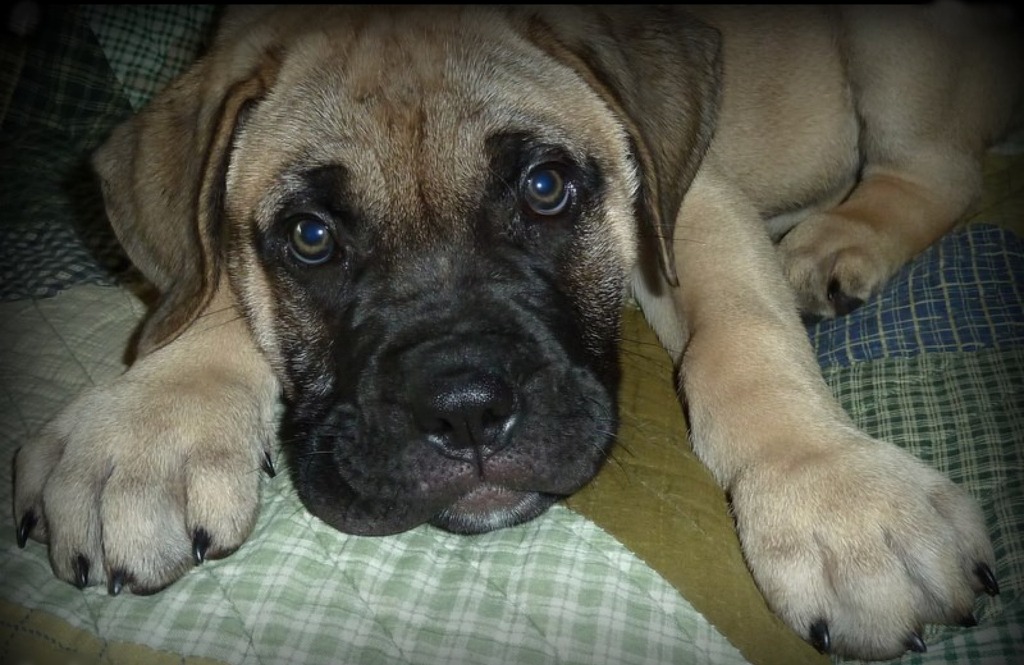
I have raised Bullmastiffs for thirty years here on our five acres in Monett, Missouri, and if there is one lesson that has held true through every litter, it is that a big puppy is not a puppy that should grow fast. A Bullmastiff can go from a couple of pounds at birth to well over a hundred pounds as an adult. That growth has to happen on a skeleton that is still soft, still forming, and still vulnerable. Feeding is the one part of that process entirely in your hands.
Veterinary nutrition sources, including the Merck Veterinary Manual, generally agree that excess calories and imbalanced minerals during rapid growth can contribute to developmental orthopedic problems in large and giant breeds. Genetics matter a great deal too, but the part you control is food, portion, and pace. As a "pets first" family, we measure success by how well a dog lives at age eight, not how big he looks at six months.
Choose a Large-Breed Puppy Formula
The single most useful change you can make is to feed a food formulated for large- or giant-breed puppies. These diets are designed with controlled calcium and phosphorus levels and a calorie density that supports steady growth. Regular puppy food is often richer and can push a Bullmastiff to grow faster than is healthy.
When I look at a bag, I check these things:
- A statement of nutritional adequacy that says the food is complete and balanced for growth of large-size dogs (the AAFCO-style label wording).
- Named animal protein as a leading ingredient, at a moderate, not extreme, protein level.
- Controlled calcium. More is not better. Please do not add calcium supplements to a complete puppy diet unless your veterinarian tells you to.
- A manufacturer with qualified nutritionists and a record of feeding trials.
Whichever food you choose, buy it from a reputable source and change brands gradually over seven to ten days to avoid stomach upset.
Slow and Steady: The Lean Puppy Goal
Many people are surprised when I tell them I want my Bullmastiff puppies a little lean. You should be able to feel the ribs easily under a light covering of flesh, and see a waist when looking down from above. A pudgy, round puppy looks adorable, but extra weight adds stress to growing hips, elbows, and shoulders.
Use a body condition score chart, which your veterinarian can show you, rather than relying only on the feeding chart on the bag. Those charts are a starting point. Every puppy has a different metabolism and activity level, so adjust portions up or down to keep that lean, athletic shape.
How Often and How Much
Here is the general rhythm we use. Your puppy's needs will vary, so treat this as a guideline and confirm with your vet:
- 8 to 12 weeks: three to four small meals a day.
- 3 to 6 months: three meals a day.
- 6 months to adulthood: two meals a day. I keep two meals for life.
Measure every meal with a real measuring cup or a kitchen scale. Eyeballing is how a puppy slowly gains too much. Count treats as part of the daily total, and use pieces of the regular kibble for training whenever possible.
Bloat Awareness at Mealtime
Deep-chested breeds like the Bullmastiff are at higher risk of gastric dilatation-volvulus (GDV), commonly called bloat. Splitting the day's food into two or three meals, avoiding vigorous exercise right before and after eating, and keeping mealtime calm are widely recommended precautions. I cover this in detail in Preventing Bloat (GDV) and Joint Care in Giant Breeds. The American College of Veterinary Surgeons also has helpful owner information on the condition.
In our kennel, puppies eat in a quiet spot, and then they rest. No zoomies, no hard play, no rough games for at least an hour. A slow feeder bowl can help a dog who gulps.
Exercise That Protects Growing Joints
Food is only half of joint care. Growing Bullmastiffs do best with moderate, free movement on soft, even ground, like our pasture grass. I avoid:
- Forced running or long jogging with a young puppy.
- Repeated jumping off decks, tailgates, or furniture.
- Slippery floors where a puppy's legs splay. Rugs and runners help a lot.
- Long stair-climbing sessions in the first months.
Short walks, gentle play, and plenty of naps are exactly right. Ask your veterinarian when it is appropriate to increase activity, since growth plates in giant breeds can stay open longer than many people expect.
Fresh Water, Treats, and Table Scraps
Keep clean water available at all times, though I pick it up briefly right around heavy exercise. Skip fatty table scraps, cooked bones, and rich leftovers. Some foods are toxic to dogs, including chocolate, grapes and raisins, xylitol-sweetened products, onions, and macadamia nuts. The AVMA offers general guidance on pet safety, and your vet is the best source for specifics.
Transitioning to Adult Food
Giant breeds mature slowly, so they often stay on a large-breed puppy diet longer than smaller dogs. Many Bullmastiffs move to an adult formula somewhere in the range of 12 to 18 months, but ask your veterinarian to guide the timing based on your dog's condition. Make the switch gradually, mixing in more of the new food each day over a week or more.
Keeping your adult dog lean for life is the best joint supplement there is. If you want a deeper picture of the breed's long-term needs, our Bullmastiff guide pulls it all together. And when you are weighing breeders, our article on the ethics of animal husbandry explains the standards we hold ourselves to. The health testing recommended for the breed is described by the Orthopedic Foundation for Animals.
When to Call Your Vet
Call your veterinarian promptly if your puppy has a swollen or hard belly, unproductive retching, restlessness, or drooling, because these can signal bloat, which is an emergency. Also call about limping that lasts more than a day, reluctance to rise, a "bunny hop" gait, vomiting or diarrhea that persists, or sudden loss of appetite.
Frequently Asked Questions
Can I feed my Bullmastiff puppy adult dog food?
It is generally best to use a complete diet made for large-breed puppies during growth, because it is balanced for steady development. Ask your vet before making any exception.
Should I give joint supplements to my puppy?
Healthy puppies on a good large-breed diet usually do not need extra calcium, and I would not add supplements without veterinary advice. Some vets discuss joint supplements for adults, but the evidence varies.
How do I know if my puppy is too heavy?
You should feel the ribs easily and see a visible waist. If you have to press to find the ribs, cut portions slightly and ask your vet to score your puppy's body condition.
Is free feeding okay?
I do not recommend it for giant breeds. Scheduled, measured meals make it easier to control weight, watch appetite, and reduce bloat risk.
This article is for educational purposes only and is not veterinary advice. Please consult your veterinarian about your own dog's diet and health.